Speech delay is often one of the first things that makes parents wonder whether their child may be developing differently. But autism is not only about how many words a child uses or how clearly they speak. Some of the more meaningful signs can be seen in the way a child plays, shares experiences, responds to people, handles everyday interactions and approaches familiar activities.
A child may have a good vocabulary and still find social communication difficult. Another may speak very little but communicate strongly through gestures, expressions or actions. Some children may appear comfortable around adults but struggle with other children, while others may become extremely focused on particular activities and find it difficult when the way they do something is changed. These patterns are important because autism involves differences in social communication and interaction along with restricted or repetitive behaviours or interests. For families considering Autism Therapy in Delhi, recognising these patterns can be an important first step toward understanding what a child may need.
1. It Is Not Always About Whether a Child Talks
A common misconception is that a child who speaks in sentences cannot have autism. In reality, spoken language and social communication are not the same thing. A child may speak fluently but struggle with back-and-forth conversation, fail to notice when another person is losing interest, talk extensively about one preferred subject, or find it difficult to adjust the way they communicate according to the situation.
For example, a child may answer a question but rarely ask one back. They may tell you everything about a favourite topic but not notice that someone else wants to speak. They may understand words literally but struggle with tone, facial expressions or the unwritten rules of conversation. These differences can become more obvious as social expectations increase.
2. Watch How Your Child Uses Play
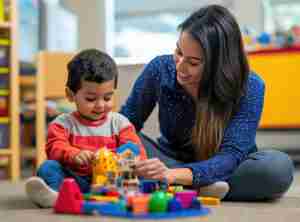
Play can reveal things that a conversation may not. A child may enjoy toys but use them in a very repetitive way, focus on one part of a toy rather than using it as intended, or repeat the same sequence every time. For instance, instead of pretending that a toy car is travelling somewhere, the child may spend long periods repeatedly spinning its wheels.
The important point is not whether a child has a favourite way of playing. Children naturally repeat enjoyable activities. What matters is the flexibility and variety of play. Can the child try a different way when someone joins in? Can they imitate a new action? Can they create a simple pretend scenario? Can they shift from one activity to another without becoming extremely distressed? Repetitive use of toys and difficulty with flexible play are among the behaviours associated with autism.
3. Sharing Enjoyment Can Look Different
Children often communicate socially without saying anything. They look at a parent after doing something interesting, point toward something they want another person to notice, bring an object to show it, or look at someone’s face to share an emotional reaction.
A child with autism may be less likely to naturally share those moments. They may bring an object only because they need help with it, rather than to show something exciting. They may enjoy an activity independently without checking whether another person is enjoying it too. They may also rarely point simply to draw attention to something interesting. These are differences in joint attention, an important part of early social communication. CDC developmental guidance includes sharing interests and pointing to show something interesting among early social milestones.
4. When a Child Wants Things Done in Exactly One Way
Some children become noticeably uncomfortable when a familiar routine changes. It could be taking a different route to school, using a different cup, moving a toy from its usual place or changing the order of a familiar activity.
The concern is not that the child prefers routine. Predictable routines help many children. The stronger signal is rigidity: the child may become extremely upset over relatively small changes and find it difficult to move forward even when the change is explained. Insistence on sameness, difficulty with transitions and distress when routines change are recognised characteristics associated with autism. For parents exploring Autism Therapy in Delhi, understanding this difference can be useful because support may involve helping the child gradually build flexibility rather than simply trying to eliminate every routine.
5. Strong Interests Can Become More Than a Favourite Hobby
Children can become fascinated by dinosaurs, trains, numbers, maps, animals or particular cartoons. Having a strong interest alone does not indicate autism. The pattern becomes more significant when the interest is unusually intense, dominates the child’s activities, or becomes difficult to shift away from.
A child may want to talk about the same subject repeatedly, remember very detailed information about it, become distressed when someone interrupts the activity, or choose that subject over nearly every other form of play. These highly focused interests are among the restricted or repetitive patterns seen in autism.
6. Social Difficulties May Become Clearer Around Other Children
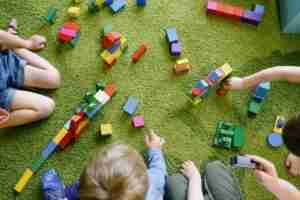
Some children seem comfortable with parents and familiar adults but have a much harder time with peers. They may stand near other children without joining the game, copy what others are doing without understanding the social exchange, struggle with taking turns, or prefer to control the activity rather than negotiate with another child.
As children grow older, these difficulties can become more noticeable because friendships require increasingly complex skills. A child may not understand why another child is upset, may find it difficult to change their behaviour according to the situation, or may struggle to understand unwritten social rules. NIMH notes that autistic children can experience difficulties understanding other people’s perspectives, adjusting behaviour to social situations and developing friendships.
7. Facial Expressions and Gestures Can Tell Part of the Story
Communication is not only verbal. Facial expressions, gestures, body language, tone and eye gaze all help people understand one another. Some autistic children may use fewer gestures, show facial expressions that do not always match the situation, or find it difficult to interpret what another person’s expression or body language means.
A child may understand the words “I’m fine” but not notice from someone’s face or tone that the person is actually upset. Another may speak appropriately but stand unusually close, avoid looking toward the person they are speaking to, or miss cues that normally guide a conversation. These differences may be subtle, especially in older children, which is why looking at patterns across situations is more useful than focusing on one behaviour.
8. When Everyday Conversations Feel One-Sided
Back-and-forth interaction is different from simply talking. A child may answer direct questions but rarely start conversations, ask about another person’s interests or build on what someone else has said. They may return repeatedly to the same topic even when the conversation has moved on.
For example, instead of discussing what happened at school, a child may immediately return to a favourite subject. They may also give very detailed information without noticing that the listener does not need every detail. These patterns can become more visible with age because conversations increasingly depend on recognising another person’s perspective and adjusting communication accordingly.
9. Autism Can Look Very Different From One Child to Another
There is no single “autistic behaviour.” Some children may have clear social communication differences from a young age. Others may initially appear to be developing typically and become more noticeably different as social demands increase. Some children speak fluently, while others use few or no spoken words. Some need substantial day-to-day support, while others manage many activities independently.
That is why parents should avoid comparing one child’s presentation with another child’s experience. Two children can have completely different strengths and challenges and still fall within the autism spectrum.
10. One Sign Does Not Mean Autism
A child who avoids eye contact, loves lining up toys, prefers routines or talks extensively about one subject does not automatically have autism. Individual behaviours can appear in children who are not autistic as well. Autism is identified through a broader pattern involving social communication and interaction together with restricted or repetitive behaviours or interests, with symptoms affecting everyday functioning. What matters is the overall pattern, how consistently it appears, and whether it is affecting the child’s ability to participate in family life, school, play or relationships.
11. What Autism Therapy Can Focus On
Autism Therapy in Delhi should not be reduced to teaching a child to perform isolated behaviours. The goals should relate to meaningful everyday functioning. Depending on the child’s needs, support may focus on social communication, play skills, flexibility, participation, emotional and behavioural regulation, independence, or learning how to navigate everyday social situations. One child may need help joining group play. Another may need support with conversational turn-taking. Another may need help coping with transitions or becoming more flexible during daily routines. Because autism presents differently across children, intervention should be based on the child’s individual profile rather than a fixed programme.
At Asha Hai, autism-related support can be considered alongside services such as Development Therapy, Occupational Therapy, Play and Language Therapy, and Social Communication and Behaviour Therapy, depending on the child’s needs. This allows intervention to address the areas that are affecting the child’s everyday participation rather than treating autism as a single set of symptoms.
12. Progress Should Be Visible in Everyday Life
Useful progress is not limited to what a child can demonstrate during a therapy session. It may look like joining a sibling’s game for longer, taking turns during an activity, coping better when a routine changes, communicating an interest to another person, participating in a classroom activity, or moving between activities with less adult support.
For Autism Therapy in Delhi, this everyday transfer is an important measure of whether intervention is actually helping. A skill becomes more meaningful when the child can use it naturally with different people and in different situations.
13. When a Closer Look May Be Helpful
It may be worth seeking professional guidance when several of these patterns appear together, particularly when they persist and interfere with social interaction, play, learning or everyday functioning. This is especially relevant when a child seems significantly different in the way they communicate, engage with people, play or respond to change.
A professional evaluation can help distinguish between an isolated behaviour and a broader developmental pattern. It can also identify the child’s strengths, which are important when planning support. A diagnosis should not be made from an online article or a checklist alone.
Autism can be easy to miss when the focus is only on speech. A child may speak well but struggle to share enjoyment, take part in a back-and-forth conversation, understand social cues, play flexibly, build friendships or manage changes to familiar routines. Looking at these everyday patterns can give parents a much clearer understanding of what they are observing. It does not mean that every unusual behaviour points to autism, but persistent patterns deserve attention rather than being dismissed as a personality trait or something a child will simply “grow out of.”
When these differences begin affecting everyday life, Autism Therapy in Delhi can provide structured support based on the child’s specific strengths and needs. At Asha Hai, the focus can extend beyond a single symptom to help children build practical communication, social, behavioural and developmental skills that they can use in the settings that matter most to them.